PORT LOUIS (Reuters) - At least 10 people have been killed in flash floods in Mauritius and more downpours could be on the way, officials and the Indian Ocean island's meteorological service said on Sunday.
The deaths occurred on Saturday and most of the victims were trapped in an underpass leading to the Caudan Waterfront, a commercial area in Port Louis.
Prime Minister Navinchandra Ramgoolam said on Sunday that Port Louis had a torrential downpour with 152 mm falling in two hours.
"The speed of the torrents of water has led to tragic loss of life and heavy damage to property," he said, adding that he was declaring Monday a day of mourning.
The Mauritius meteorological service said showers were expected overnight and on Monday, with isolated thunderstorms that could cause further floods.
(Reporting by Jean Paul Arouff; Writing by Edmund Blair; Editing by Stephen Powell)
According to a new Harris Poll survey, conducted on behalf of the management consulting firm Accenture, less than one-third of U.S. doctors think patients should have full access to their own electronic health records.
As a patient, you may literally trust your doctor with your life, and the doctor-patient relationship relies on this level of trust. The relationship should be one of give and take, even if the exchange is sometimes dominated by the professional.
So it may come as a surprise that 65 percent of docs believe their patients should have only limited access to their electronic health records, and 4 percent believe patients should have no access at all.
More from Everyday Health: More Evidence Linking TV to Kids' Bad Behavior Kids' Exercise May Protect Them From Bone Breaks in Old Age Stem Cells From Amniotic Fluid May Cure Intestinal Damage in Infants
One thing is clear ? patients believe electronic medical records improve their care. According to a 2011 survey, conducted by GfK Roper on behalf of Practice Fusion, a San Francisco-based electronic health record provider, 78 percent of patients whose doctors kept electronic medical records felt that their care improved.
"Patients want their healthcare to reflect the fact we're in the 21st century," said Ryan Howard, CEO of Practice Fusion. "They want to have prescriptions sent electronically, to receive email appointment reminders and to review past diagnoses and upcoming appointments online."
?Several US health systems have proven that the benefits outweigh the risks in allowing patients open access to their medical records, and we expect this trend to continue,? said Mark Knicrehm, senior global managing director of Accenture Health, of the poll?s results.
While a majority of doctors in the Accenture survey wouldn?t trust patients with full access to their records, 81 percent said they wanted their patients to keep the records up to date, which may seem like a disconnect.
Primarily, though, the doctors are referring to updating personal information, not medical information. Almost all doctors polled think patients should update their own demographic information (95 percent), family history (88 percent), medications (86 percent), allergies (85 percent), and even some medical information, like new symptoms and self-administered test results (81 percent).
There seem to be few disadvantages to giving patients access to records and some real advantages, according to experts and commentators. So why do many doctors feel that their patients should not have full access to their electronic medical records?
Stephen Baker, author of The Numerati blog, wrote that patient sensitivity may be to blame for doctors' unwillingness to share medical records.
?This would not be a problem if we, as a society, weren't so hypersensitive to 'hurtful' words, and eager to sue in cases of errors,? Baker stated on his blog.
He used an example of a doctor speculating about his or her patient being the victim of abuse. While the patient might be offended on reading this information in their electronic medical record, the doctor might feel that it's important to document their observations. Baker concluded, ?if we want the data, we should be ready to see and accept it, even when offensive. This openness would pay off richly.?
Thomas J. Vento, MD, a family doctor in private practice in Reisterstown, Md., sees the benefits of open access to medical records, because patients can help prevent medical errors.
"It?s a great idea to give your family doctor a copy to keep in his file, but it?s also very important to have your own copy of the health journal in case of a medical emergency," Dr. Vento said. "Being an active voice in health care is an integral part of getting the best care you can for yourself and your children."
After a 2012 study found that doctors failed to read many test results when patients were discharged from hospitals, experts claimed that electronic records could help "prevent important information from falling through cracks."
"[This] problem could be solved with electronic medical records that keep track of test results and alert doctors when the results have not been reviewed," said Gordon Schiff, MD, associate director of the Brigham Center for Patient Safety Research and Practice, at the time. "Patients also can play a role by keeping track of their tests and asking their doctor about the results."
As doctors and medical institutions continue to switch to electronic medical records, and patients demand more access, the debate will continue: How much information should patients have access to?
"Electronic Health Records: Doctors Want to Keep Patients Out" originally appeared on Everyday Health.
LAS VEGAS (AP) ? Police chased a former lawmaker on a freeway between Las Vegas and Los Angeles and arrested him at gunpoint following a struggle, hours after he became the first person ever expelled from the Nevada Legislature.
Steven Brooks was jailed in California's San Bernardino County after being subdued with punches and a Taser. Police alleged he attacked a police dog with a wrench.
"It's hard to know where he was going, what he thought he was doing and why he would be involved in a high-speed chase," Brooks' attorney, Mitchell Posin, told The Associated Press on Friday. "I think he feels the world is against him. But I'm just piecing together bits of information."
Brooks' arrest Thursday near the California city of Victorville was his third since January, and came just hours after colleagues in the Legislature deemed the Democrat from North Las Vegas too dangerous and unpredictable to serve his elected term. Lawmakers wept Thursday as they cited concerns about their own safety and evidence collected about an increasingly bizarre series of public incidents.
Police allege that Brooks threatened a Democratic party Assembly leader before one arrest and threw punches and grabbed for the gun of a police officer in his second arrest about three weeks later. He also was hospitalized for five days for a mental evaluation following another police encounter that didn't result in an arrest.
He was sworn in and then banished from the Legislature building as a possible security risk days after arriving in a hooded sweatshirt and ducking into an office to avoid reporters.
He posed shirtless for a newspaper photograph to show injuries that he said he suffered during his first arrest, but that weren't apparent. He tried unsuccessfully to buy a rifle at a sporting goods store in Sparks. He bought body armor from a radio show host in Las Vegas. He lost his job as a Las Vegas city management analyst. And he reported his car stolen.
Assembly Majority Leader William Horne, D-Las Vegas, who called Brooks "potentially dangerous" and issued an order banning him from the Legislature building in Carson City, said Friday he was saddened by Brooks' arrest.
"I hope they get Steven the help he clearly needs before he or someone else is hurt or worse," Horne said.
During Thursday's arrest Brooks appeared to be punched by one uniformed officer before he was shackled by the wrists and ankles and taken away on an ambulance gurney. Police said the chase followed a call from a tow truck operator who argued with a motorist about the cost of fixing a flat tire on the freeway shoulder in Barstow.
"We just know the tow truck driver was uncomfortable enough to call us for assistance," California Highway Patrol Officer Don Spiker said. "He said the subject was acting strange."
The tow operator didn't immediately respond Friday to messages from The Associated Press.
Barstow police allege Brooks, 41, sped away with the tire still flat and tossed objects from the vehicle before a spike strip was deployed to disable the SUV and he tangled with uniformed officers and the police dog at the side of the freeway. The objects were not described, and police didn't respond to questions about whether Brooks was armed.
Witness Jennifer Simpson said she was alerted to the chase by police helicopters overhead and saw a man get out of a red four-door SUV after it veered to the side of the road near Victorville, about 180 miles southwest of Las Vegas.
Simpson, a mother of two who lives in an apartment near the interstate, said the man didn't follow officers' commands to turn around and put his hands in the air. He instead ran back to the SUV, chased by a police dog.
Simpson said the driver shut himself in the vehicle before several officers with guns drawn pulled him out. She said she saw at least one officer punch the man several times.
Simpson's husband videotaped four minutes of the struggle, in which uniformed officers wrestle the driver to the ground in front of the SUV and an officer in a tan uniform raises his arms three times in apparent punching motions. The driver cannot be seen on the ground.
Kris Reilly, city editor of The Daily Press in Victorville, said he arrived to see the motorist a few minutes later, struggling against wrist and ankle restraints as he was loaded on a gurney into an ambulance.
"He was yelling something to the effect that, 'These cops are going down!'" Reilly said. "He was yelling quite a bit."
Barstow Police Chief Albert Ramirez released a statement alleging that when the police dog was sent into the SUV, Brooks choked and hit the dog with a socket wrench. The dog, named Buck, was treated by a veterinarian head and leg cuts.
"Brooks continued to resist the officers and not comply with their orders," the Barstow police statement said. "A Taser was utilized on Brooks and after this, handcuffs were applied."
The police report does not describe any police officers being injured and doesn't address whether officers punched Brooks.
Telephone and email messages for Ramirez and other Barstow police supervisors weren't returned.
Brooks was examined at Barstow Community Hospital before he was taken to a San Bernardino County jail in Rancho Cucamonga, police said.
Jail records showed Brooks was being held on $100,000 bail on four felony charges including resisting a police officer with force, willful harm to a police service dog, felony evading arrest and throwing objects from a vehicle with intent to harm.
San Bernardino County sheriff's spokeswoman Cindy Bachman said Brooks was due for arraignment Tuesday in Barstow.
Brooks' expulsion from the state Assembly came by voice vote following a recommendation from a bipartisan panel that met largely behind closed doors. The seven panel members voted 6-1 for expulsion after considering a more than 900-page investigative report produced by a Las Vegas lawyer hired as a special counsel.
A coalition of Nevada media outlets is seeking to have the investigative report made public.
Brooks' first arrest was Jan. 19, after he was accused of making threats toward legislative colleagues including Assembly Democratic Speaker Marilyn Kirkpatrick. North Las Vegas police said Brooks had a gun and ammunition in his car when he was arrested. The state attorney general's office hasn't filed criminal charges in the case.
Brooks was sworn in at the Legislature on Feb. 4, but was arrested again Feb. 10 at his estranged wife's home in Las Vegas after police alleged he tried to punch and grabbed for the gun of an officer who responded to a domestic dispute. Brooks faces a court hearing in May in Las Vegas on one felony and three lesser charges.
___
Associated Press Writer Tami Abdollah in Los Angeles and researcher Rhonda Shafner in New York contributed to this report.
___
Find Ken Ritter on Twitter at http://twitter.com/krttr and Michelle Rindels at http://twitter.com/RindelsAP
FILE - In this May 17, 2012 file photo, Sen. Charles Schumer, D-N.Y. gestures during a news conference on Capitol Hill in Washington. Big business and major labor unions appeared ready Friday, March 29, 2013 to end a fight over a new low-skilled worker program that had threatened to upend negotiations on a sweeping immigration bill in the Senate providing a pathway to citizenship for 11 million immigrants already in the U.S. Schumer, who's been brokering talks between the AFL-CIO and the Chamber of Commerce, said in a statement that negotiators are "very close, closer than we have ever been, and we are very optimistic." He said there were still a few issues remaining. (AP Photo/Susan Walsh, File)
FILE - In this May 17, 2012 file photo, Sen. Charles Schumer, D-N.Y. gestures during a news conference on Capitol Hill in Washington. Big business and major labor unions appeared ready Friday, March 29, 2013 to end a fight over a new low-skilled worker program that had threatened to upend negotiations on a sweeping immigration bill in the Senate providing a pathway to citizenship for 11 million immigrants already in the U.S. Schumer, who's been brokering talks between the AFL-CIO and the Chamber of Commerce, said in a statement that negotiators are "very close, closer than we have ever been, and we are very optimistic." He said there were still a few issues remaining. (AP Photo/Susan Walsh, File)
Several southwest Michigan pastors along with immigrant families and members of the general public take part in a pray-in for immigration reform event outside of Representative Fred Upton's office in downtown Kalamazoo on Friday, March 29, 2013. (AP Photo/Kalamazoo Gazette-MLive Media Group, Matt Gade ) ALL LOCAL TV OUT; LOCAL TV INTERNET OUT
Several southwest Michigan pastors along with immigrant families and members of the general public take part in a pray-in for immigration reform event outside of Representative Fred Upton's office in downtown Kalamazoo on Friday, March 29, 2013. (AP Photo/Kalamazoo Gazette-MLive Media Group, Matt Gade ) ALL LOCAL TV OUT; LOCAL TV INTERNET OUT
WASHINGTON (AP) ? Big business and labor have resolved a dispute over a low-skilled worker program that threatened to hold up agreement on a sweeping immigration bill, according to a person familiar with the negotiations.
The deal was struck in a phone call late Friday night with AFL-CIO President Richard Trumka, U.S. Chamber of Commerce head Tom Donohue, and Democratic Sen. Chuck Schumer of New York, who's been mediating the dispute.
The person, who spoke on condition of anonymity ahead of a formal announcement, said the deal resolves disagreements over wages for the new workers and which industries would be included. That had led talks to break down a week ago.
The deal must still be signed off on by the seven other senators working with Schumer to negotiate a bipartisan immigration bill ? but that's expected to happen. The agreement between business and labor removes the biggest hurdle to completion of the immigration bill to secure the border, crack down on employers, improve legal immigration and create a pathway to citizenship for 11 million illegal immigrants already here.
The bipartisan senate group is expected to introduce the bill the week of April 8 after Congress returns from a two-week recess.
The AFL-CIO and the Chamber had been fighting over wages for tens of thousands of low-skilled workers who would be brought in under the new program to fill jobs in construction, hotels and resorts, nursing homes and restaurants, and other industries.
On Friday, officials from both sides said there was basic agreement on the wage issue, and Schumer said a final deal on the worker dispute was very close.
"We're feeling very optimistic on immigration: Aspiring Americans will receive the road map to citizenship they deserve and we can modernize 'future flow' without reducing wages for any local workers, regardless of what papers they carry," AFL-CIO spokesman Jeff Hauser said in a statement earlier this week. "Future flow" refers to future arrivals of legal immigrants.
Under the emerging agreement between business and labor, a new "W'' visa program would bring tens of thousands of lower-skilled workers a year to the country. The program would be capped at 200,000 a year, but the number of visas would fluctuate, depending on unemployment rates, job openings, employer demand and data collected by a new federal bureau pushed by the labor movement as an objective monitor of the market.
The workers would be able to change jobs and could seek permanent residency. Under current temporary worker programs, personnel can't move from employer to employer and have no path to permanent U.S. residence and citizenship. And currently there's no good way for employers to bring many low-skilled workers to the U.S. An existing visa program for low-wage nonagricultural workers is capped at 66,000 per year and is supposed to apply only to seasonal or temporary jobs.
The Chamber of Commerce said workers would earn actual wages paid to American workers or the prevailing wages for the industry they're working in, whichever is higher. The Labor Department determines prevailing wage based on customary rates in specific localities, so that it varies from city to city.
The low-skilled worker issue had loomed for weeks as perhaps the toughest matter to settle in monthslong closed-door talks on immigration among the senators, including Republicans John McCain of Arizona and Marco Rubio of Florida. The issue helped sink the last major attempt at immigration overhaul in 2007, when the legislation foundered on the Senate floor after an amendment was added to end a temporary worker program after five years, threatening a key priority of the business community.
The amendment passed by just one vote, 49-48. President Barack Obama, a senator at the time, joined in the narrow majority voting to end the program after five years.
___
Follow Erica Werner on Twitter: https://twitter.com/ericawerner
A lot of big companies today have their own internet facilities to host their own web servers. They also have their own team of professionals that are expert in IT to be able to handle and manipulate the site while small to medium scale companies don?t have. They need colocation Sydney Australia for their business if they want to function similar to large scale companies without spending huge amount of cash. In terms of hosting, you can choose from simple to dedicated servers. In this article, you will learn more why there is a need for colocation Sydney Australia over other hosting choices.
?
Everything about colocation Sydney Australia
?
Colocation Sydney Australia is less expensive than a standard web hosting service; it also allows you to put your equipment in another place and still be able to share bandwidth like your own. If you have the machine and you want it to be installed to another location that is possible. The company will help by providing you with an IP and bandwidth to be able to power up your server. As soon as its running, you can now use it like you would normally in a website that is hosted by a provider. It?s just that you are the owner of the hardware.
?
The paybacks of colocation Sydney Australia
?
? One of the biggest payback of using colocation Sydney Australia is the bandwidth and its cost. Do you know that you can use bigger bandwidth without extra cost? Low cost bandwidth with limited amount such as what DSL offers cost just the same as a colocation facility but they usually provide huge bandwidth speeds and better network too.
?
?
Colocation Sydney Australia facilities provide better protection from network and power failure compared to other providers. You don?t have to worry about perils because you can now work safely without worrying about power and network failure along the way.
?
? Because you own the machinery in the server, if you happen to decide to upgrade the memory or to downgrade it, you don?t have to wait for the customer support of the provider because you own the machine and you have total control over it.
?
? You own the software too so you don?t have to depend on the provider in terms of software installation or tools that you would like to use for your system. You can just buy and install them at once.
?
? Moving won?t be a big problem because you can leave the server even if it?s running the whole time.
?
? Better security can be achieved for your equipment and your server is also well kept in a better environment.
?
Is colocation the right choice? This has been the question of a lot of business owners who would like to acquire for their sites. If you want to have a bigger web presence then colocation is the right one for you so you can also have bigger network connections without huge spending. You have your choice and its best to choose the right company wisely.
Colocation Sydney Australia - SIS Hosting provides reliable and affordable website hosting to small, medium and large enterprise. For more details visit http://sishosting.com.au
Mar. 29, 2013 ? When blessed with a resource in overwhelming abundance it's generally a good idea to make valuable use of that resource. Lignocellulosic biomass is the most abundant organic material on Earth. For thousands of years it has been used as animal feed, and for the past two centuries has been a staple of the paper industry. This abundant resource, however, could also supply the sugars needed to produce advanced biofuels that can supplement or replace fossil fuels, providing several key technical challenges are met.
One of these challenges is finding ways to more cost-effectively extract those sugars. Major steps towards achieving this breakthrough are being taken by researchers at the U.S. Department of Energy (DOE)'s Joint BioEnergy Institute (JBEI).
"Through the tools of synthetic biology, we have engineered healthy plants whose lignocellulosic biomass can more easily be broken down into simple sugars for biofuels," says Dominique Loque, who directs the cell wall engineering program for JBEI's Feedstocks Division. "Working with the model plant, Arabidopsis, as a demonstration tool, we have genetically manipulated secondary cell walls to reduce the production of lignin while increasing the yield of fuel sugars."
JBEI is a scientific partnership led by Lawrence Berkeley National Laboratory (Berkeley Lab) whose mission is to advance the development of next generation biofuels that can provide the nation with clean, green and renewable transportation energy that will create jobs and boost the economy. Loque and his research group have focused on reducing the natural recalcitrance of plant cell walls to give up their sugars. Unlike the simple starch-based sugars in corn and other grains, the complex polysaccharide sugars in plant cell walls are locked within a robust aromatic polymer called lignin. Setting these sugars free from their lignin cage has required the use of expensive and environmentally harsh chemicals at high temperatures, a process that helps drive production costs of advance biofuels prohibitively high.
"By embedding polysaccharide polymers and reducing their extractability and accessibility to hydrolytic enzymes, lignin is the major contributor to cell wall recalcitrance," Loque says. "Unfortunately, most efforts to reduce lignin content during plant development have resulted in severe biomass yield reduction and a loss of integrity in vessels, a key tissue responsible for water and nutrient distribution from roots to the above-ground organs."
Lignin has also long posed problems for pulping and animal feed. To overcome the lignin problem, Loque and his colleagues rewired the regulation of lignin biosynthesis and created an artificial positive feedback loop (APFL) to enhance secondary cell wall biosynthesis in specific tissue. The idea was to reduce cell wall recalcitrance and boost polysaccharide content without impacting plant development.
"When we applied our APFL to Arabidopsis plants engineered so that lignin biosynthesis is disconnected from the fiber secondary cell wall regulatory network, we maintained the integrity of the vessels and were able to produce healthy plants with reduced lignin and enhanced polysaccharide deposition in the cell walls," Loque says. "After various pretreatments, these engineered plants exhibited improved sugar releases from enzymatic hydrolysis as compared to wild type plants. In other words we accumulated the good stuff -- polysaccharides -- without spoiling it with lignin."
Loque and his colleagues believe that the APFL strategy they used to enhance polysaccharide deposition in the fibers of their Arabidopsis plants could be rapidly implemented into other vascular plant species as well. This could increase cell wall content to the benefit of the pulping industry and forage production as well as for bioenergy applications. It could also be used to increase the strength of cereal straws, reducing crop lodging and seed losses. Since regulatory networks and other components of secondary cell wall biosynthesis have been highly conserved by evolution, the researchers feel their lignin rewiring strategy should also be readily transferrable to other plant species. They are currently developing new and even better versions of these strategies.
"We now know that we can significantly re-engineer plant cell walls as long as we maintain the integrity of vessels and other key tissues," Loque says.
A paper describing this research in detail has been published in Plant Biotechnology Journal. The paper is titled "Engineering secondary cell wall deposition in plants." Loque is the corresponding author. Co-authors are Fan Yang, Prajakta Mitra, Ling Zhang, Lina Prak, Yves Verhertbruggen, Jin-Sun Kim, Lan Sun, Kejian Zheng, Kexuan Tang, Manfred Auer and Henrik Scheller.
This research was supported by the DOE Office of Science.
Share this story on Facebook, Twitter, and Google:
Other social bookmarking and sharing tools:
Story Source:
The above story is reprinted from materials provided by DOE/Lawrence Berkeley National Laboratory.
Note: Materials may be edited for content and length. For further information, please contact the source cited above.
Journal Reference:
Fan Yang, Prajakta Mitra, Ling Zhang, Lina Prak, Yves Verhertbruggen, Jin-Sun Kim, Lan Sun, Kejian Zheng, Kexuan Tang, Manfred Auer, Henrik V. Scheller, Dominique Loqu. Engineering secondary cell wall deposition in plants. Plant Biotechnology Journal, 2013; 11 (3): 325 DOI: 10.1111/pbi.12016
Note: If no author is given, the source is cited instead.
Disclaimer: Views expressed in this article do not necessarily reflect those of ScienceDaily or its staff.
Mar. 28, 2013 ? Like tiny, crawling compass needles, whole living cells and cell fragments orient and move in response to electric fields -- but in opposite directions, scientists at the University of California, Davis, have found. Their results, published April 8 in the journal Current Biology, could ultimately lead to new ways to heal wounds and deliver stem cell therapies.
When cells crawl into wounded flesh to heal it, they follow an electric field. In healthy tissue there's a flux of charged particles between layers. Damage to tissue sets up a "short circuit," changing the flux direction and creating an electrical field that leads cells into the wound. But exactly how and why does this happen? That's unclear.
"We know that cells can respond to a weak electrical field, but we don't know how they sense it," said Min Zhao, professor of dermatology and ophthalmology and a researcher at UC Davis' stem cell center, the Institute for Regenerative Cures. "If we can understand the process better, we can make wound healing and tissue regeneration more effective."
The researchers worked with cells that form fish scales, called keratocytes. These fish cells are commonly used to study cell motion, and they also readily shed cell fragments, wrapped in a cell membrane but lacking a nucleus, major organelles, DNA or much else in the way of other structures.
In a surprise discovery, whole cells and cell fragments moved in opposite directions in the same electric field, said Alex Mogilner, professor of mathematics and of neurobiology, physiology and behavior at UC Davis and co-senior author of the paper.
It's the first time that such basic cell fragments have been shown to orient and move in an electric field, Mogilner said. That allowed the researchers to discover that the cells and cell fragments are oriented by a "tug of war" between two competing processes.
Think of a cell as a blob of fluid and protein gel wrapped in a membrane. Cells crawl along surfaces by sliding and ratcheting protein fibers inside the cell past each other, advancing the leading edge of the cell while withdrawing the trailing edge.
Assistant project scientist Yaohui Sun found that when whole cells were exposed to an electric field, actin protein fibers collected and grew on the side of the cell facing the negative electrode (cathode), while a mix of contracting actin and myosin fibers formed toward the positive electrode (anode). Both actin alone, and actin with myosin, can create motors that drive the cell forward.
The polarizing effect set up a tug-of-war between the two mechanisms. In whole cells, the actin mechanism won, and the cell crawled toward the cathode. But in cell fragments, the actin/myosin motor came out on top, got the rear of the cell oriented toward the cathode, and the cell fragment crawled in the opposite direction.
The results show that there are at least two distinct pathways through which cells respond to electric fields, Mogilner said. At least one of the pathways -- leading to organized actin/myosin fibers -- can work without a cell nucleus or any of the other organelles found in cells, beyond the cell membrane and proteins that make up the cytoskeleton.
Upstream of those two pathways is some kind of sensor that detects the electric field. In a separate paper to be published in the same journal issue, Mogilner and Stanford University researchers Greg Allen and Julie Theriot narrow down the possible mechanisms. The most likely explanation, they conclude, is that the electric field causes certain electrically charged proteins in the cell membrane to concentrate at the membrane edge, triggering a response.
The team also included Hao Do, Jing Gao and Ren Zhao, all at the Institute for Regenerative Cures and the UC Davis departments of Ophthalmology and Dermatology. Sun is co-advised by Mogilner and Zhao; Gao is now working at Yunnan Normal University, Kunming, China, and Ren Zhao is at the Third Military Medical University, Chongqing, China.
The work was funded by the National Institutes of Health, the California Institute for Regenerative Medicine and the National Science Foundation.
Share this story on Facebook, Twitter, and Google:
Other social bookmarking and sharing tools:
Story Source:
The above story is reprinted from materials provided by University of California - Davis.
Note: Materials may be edited for content and length. For further information, please contact the source cited above.
Journal Reference:
Yaohui Sun, Hao Do, Jing Gao, Ren Zhao, Min Zhao, Alex Mogilner. Keratocyte Fragments and Cells Utilize Competing Pathways to Move in Opposite Directions in an Electric Field. Current Biology, 2013; DOI: 10.1016/j.cub.2013.02.026
Note: If no author is given, the source is cited instead.
Disclaimer: Views expressed in this article do not necessarily reflect those of ScienceDaily or its staff.
By Martyn Herman LONDON, March 28 (Reuters) - Whether by design, necessity, self-interest or because of all three, nurturing youngsters has become fashionable for England's elite with no expense spared in the hunt for the new Wayne Rooney or Steven Gerrard. The length and breadth of the country, scouts from top clubs are hoovering up promising footballers barely old enough to tie their bootlaces in a bid to unearth the 30 million pounds ($45.40 million) treasures of the future. ...
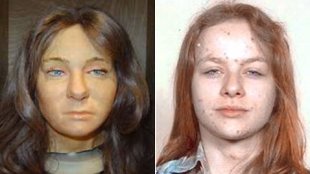
A severed head found on a golf course 24 years ago has been identified using DNA evidence and may be linked to a serial killer, New Jersey police said today.
The head of 25-year-old Heidi Balch, who worked as a prostitute around Manhattan in 1988, was found on a Hopewell Township, N.J., golf course, in 1989, but was only identified this month after collaboration between the New Jersey State Police and the Hopewell Township Police Department.
"It was shocking," said Hopewell Township Police Chief George Meyer, who was one of the detectives called to the scene after the head was found near the seventh hole.
"Periodically, over the years, detectives would pick up the case and make efforts at identifying her," he said. "I kind of thought, 'No, she is never going to be identified.'"
A break came when detectives realized the dumped head matched a story from serial killer Joel Rifkin, who claimed to have dismembered and dumped a victim named Susie around New Jersey, State Police Det. Sgt. Stephen Urbanski told ABCNews.com. Rifkin was never convicted for the alleged crime, but is serving 200 years in prison for other murders.
Detectives decided to chase the story.
"The team obtained the names of all the prostitutes that were registered around the same time [from the NYPD]," Urbanski said.
They then compared the photos to the composite of the severed head. A woman named Susan Spencer seemed to be a match.
After chasing aliases and false Social Security numbers attached to the woman, a face on a missing persons website jumped out at Urbanski.
It was Heidi Balch.
The problem was, Balch wasn't reported missing by her aunt until 2001 and, when making the report, she told police her niece was last seen in 1995.
Still, the team decided to pursue the lead and paid the aunt a visit. Not only did they learn that the sighting in 1995 was secondhand information, but Balch's parents were alive and living in Baltimore.
"After interviewing [the aunt], we went down to Baltimore and grabbed the mom's DNA," Urbanski said.
The DNA was a match to the skull, closing the 24-year-old cold case.
"Looking at the horrific case, and after a lot of people worked on it, it was amazing it came to this," Urbanski said. "It was a matter of finding those clues."
Mar. 27, 2013 ? Researchers have identified genetic risk factors that may accelerate a teen's progression to becoming a lifelong heavy smoker.
The team of scientists from the U.S., the U.K. and New Zealand examined earlier studies by other research teams to develop a genetic risk profile for heavy smoking. Then they looked at their own long-term study of 1,000 New Zealanders from birth to age 38 to identify whether individuals at high genetic risk got hooked on cigarettes more quickly as teens and whether, as adults, they had a harder time quitting.
Study participants who had the high-risk genetic profile were found to be more likely to convert to daily smoking as teenagers and then progress more rapidly to heavy smoking (a pack a day or more). When assessed at age 38, the higher-risk individuals had smoked heavily for more years, had more often developed nicotine dependence and were more likely to have failed in attempts to quit smoking.
"Genetic risk accelerated the development of smoking behavior," said Daniel Belsky, a post-doctoral research fellow at Duke University's Center for the Study of Aging and Human Development and the Duke Institute for Genome Sciences & Policy. "Teens at a high genetic risk transitioned quickly from trying cigarettes to becoming regular, heavy smokers."
A person's genetic risk profile did not predict whether he or she would try cigarettes. But for those who did try cigarettes, having a high-risk genetic profile predicted increased likelihood of heavy smoking and nicotine dependence.
The findings appear March 27 in JAMA Psychiatry. They were supported by multiple grants from the U.S. National Institutes of Health, as well as the U.K. Medical Research Council and the New Zealand Health Research Council.
The Duke researchers developed a new "genetic risk score" for the study by examining prior genome-wide associations (GWAS) of adult smokers. These studies scanned the entire genomes of tens of thousands of smokers to identify variants that were more common in the heaviest smokers. The variants they identified were located in and around genes that affect how the brain responds to nicotine and how nicotine is metabolized, but it is not yet known how the specific variants affect gene function.
It makes sense that the genes on which the group based their risk score are involved in nicotine metabolism and sensitivity, said Jed Rose, a Duke nicotine addiction researcher who was not involved in this study. "Addictions are a learned behavior and it requires reinforcement through neural pathways."
In their first step, the researchers found the genetic risk score they developed was able to predict heavy smoking among individuals in two large databases created by other researchers.
Then they turned to their New Zealand sample of 880 individuals of European descent to see whether the genetic risk score predicted who initiated smoking, who progressed to heavy smoking, and who developed nicotine dependence and experienced relapse after quitting.
Genetic risk was not related to whether a person tried smoking, which 70 percent of the sample had. One reason for this was that so-called "chippers" -- smokers who consume cigarettes only on weekends or smoke only one or two per day -- had even lower genetic risk than nonsmokers.
Genetic risk was related to the development of smoking problems. Among teens who tried cigarettes, those with a high-risk genetic profile were 24 percent more likely to become daily smokers by age 15 and 43 percent more likely to become pack-a-day smokers by age 18.
As adults, those with high-risk genetic profiles were 27 percent more likely to become nicotine dependent and 22 percent more likely to fail in their attempts at quitting. By age 38, a study participant with high-risk genetic profile had smoked about 7,300 more cigarettes (one "pack-year") than the average smoker.
Study participants who did not become regular, heavy smokers during their teens appeared to be "immune" to genetic risk for adult smoking problems. "The effects of genetic risk seem to be limited to people who start smoking as teens," said Belsky. "This suggests there may be something special about nicotine exposure in the adolescent brain, with respect to these genetic variants."
"Adolescence is indeed a period of high risk for nicotine addiction," said Denise Kandel, a professor of sociomedical sciences in psychiatry at Columbia University, who was not involved in this study. "The results illustrate why adolescence is of crucial importance for the development and targeting of prevention and intervention efforts. How this genetic risk affects brain functions, which in turn affect reactions to nicotine, remains to be determined."
The risk factor the team developed "may not be sensitive or specific enough to be a clinical test, but it may have public health uses," said Rose, who is the director of the Duke Center for Smoking Cessation and co-developer of the nicotine patch.
"Public health policies that make it harder for teens to become regular smokers should continue to be a focus in antismoking efforts," Belsky said.
This research received support from US-National Institute on Aging grants AG032282 and AG000029, UK Medical Research Council grant G0601483, US-NIMH grant MH077874, US-NIDA grant P30 DA023026, and US Agency for Health Care Research and Quality grant HS020534.
Share this story on Facebook, Twitter, and Google:
Other social bookmarking and sharing tools:
Story Source:
The above story is reprinted from materials provided by Duke University.
Note: Materials may be edited for content and length. For further information, please contact the source cited above.
Note: If no author is given, the source is cited instead.
Disclaimer: This article is not intended to provide medical advice, diagnosis or treatment. Views expressed here do not necessarily reflect those of ScienceDaily or its staff.
Supernovae were always thought to occur in two main varieties. But a team of astronomers including Carnegie's Wendy Freedman, Mark Phillips and Eric Persson is reporting the discovery of a new type of supernova called Type Iax. This research has been accepted for publication in The Astrophysical Journal and is available online.
Previously, supernovae were divided into either core-collapse or Type Ia categories. Core-collapse supernovae are the explosion of a star about 10 to 100 times as massive as our sun. Type Ia supernovae are the complete disruption of a tiny white dwarf.
This new type, Iax, is fainter and less energetic than Type Ia. Although both types come from exploding white dwarfs, Type Iax supernovas may not completely destroy the white dwarf.
"A Type Iax supernova is essentially a mini supernova," says lead author Ryan Foley, Clay Fellow at the Harvard-Smithsonian Center for Astrophysics (CfA). "It's the runt of the supernova litter."
The research team--which also included Max Stritzinger, formerly of Carnegie--identified 25 examples of the new type of supernova. None of them appeared in elliptical galaxies, which are filled with old stars. This suggests that Type Iax supernovas come from young star systems.
Based on a variety of observational data, the team concluded that a Type Iax supernova comes from a binary star system containing a white dwarf and a companion star that has lost its outer hydrogen, leaving it helium dominated. The white dwarf collects helium from the normal star.
Researchers aren't sure what triggers a Type Iax. It's possible that the outer helium layer ignites first, sending a shock wave into the white dwarf. Alternatively, the white dwarf might ignite first due to the influence of the overlying helium shell.
Either way, it appears that in many cases the white dwarf survives the explosion, unlike in a Type Ia supernova where the white dwarf is completely destroyed.
The team calculates that Type Iax supernovae are about a third as common as Type Ia supernovae. The reason so few have been detected is that the faintest are only one-hundredth as bright as a Type Ia supernova.
"The closer we look, the more ways we find for stars to explode," Phillips said.
The Large Synoptic Survey Telescope could discover thousands of Type Iax supernovas over its lifetime.
###
Carnegie Institution: http://www.ciw.edu
Thanks to Carnegie Institution for this article.
This press release was posted to serve as a topic for discussion. Please comment below. We try our best to only post press releases that are associated with peer reviewed scientific literature. Critical discussions of the research are appreciated. If you need help finding a link to the original article, please contact us on twitter or via e-mail.
SEOUL, South Korea (AP) ? The U.S military says two nuclear-capable B-2 bombers have completed a training mission in South Korea amid threats from North Korea that include nuclear strikes on Washington and Seoul.
The statement Thursday by U.S. Forces Korea is an unusual confirmation. It follows an earlier U.S. announcement that nuclear-capable B-52 bombers participated in ongoing U.S.-South Korean military drills.
The U.S. says the B-2 stealth bombers flew from a U.S. air base and dropped munitions on a South Korean island range before returning home.
The announcement will likely draw a strong response from Pyongyang. North Korea sees the military drills as part of a U.S. plot to invade and becomes particularly upset about U.S. nuclear activities in the region.
Washington and Seoul say they the annual drills are routine and defensive.
Penn linguistics researchers document Philadelphia's shift to a Northern accentPublic release date: 27-Mar-2013 [ | E-mail | Share ]
Contact: Jacquie Posey jposey@upenn.edu 215-898-6460 University of Pennsylvania
A new study by University of Pennsylvania linguists shows that the Philadelphia accent has changed in the last century. The traditional Southern inflections associated with Philadelphia native-born speakers are increasingly being displaced by Northern influences.
"A Hundred Years of Sound Change," published in the March issue of the journal Language, documents Philadelphia's changing accent through an analysis of speech patterns of city residents spanning more than a century.
The study is co-authored by William Labov, professor of linguistics and director of Penn's Linguistics Laboratory; Josef Fruehwald, a doctoral candidate in linguistics at Penn; and Ingrid Rosenfelder, a postdoctoral student at Penn at the time of the National Science Foundation supported study.
Labov and his team developed new computational methods to research the way in which vowels have been pronounced by Philadelphians since 1973.
"This is a breathtaking view of language change over a long period of time," Labov said. Approximately 1,000 people were involved in the study with 380 analyzed so far.
Nearly a million measurements show that two-thirds of the Philadelphia vowels are in the process of change. In one instance, the vowel used in the word "ate" has steadily moved closer to the vowel of "eat," as shown by the speaker's date of birth from 1888 to 1992. The change in progress affects equally people of all educational levels, both men and women.
"A 'snake' in the grass becomes a 'sneak' in the grass as the long vowel 'a' is pronounced with the speaker's jaw in a higher position," Labov said.
The vowel of "out" and "down" has reversed direction, after moving toward a distinctively different Philadelphia sound for the first half of the century. For those born in the 1950s and later, this vowel moved progressively back towards the position it held in 1900.
The paper looks for an explanation of these differences in the relation of Philadelphia to its geographic neighbors. In the earlier period, many Philadelphia features resembled those found in Southern dialects, and these are the changes that have reversed direction.
Those that have not are movements towards patterns heard in the Northern dialects of western New England, New York state and the Great Lakes Region. The "Northernization" of the Philadelphia region is related to other findings on the direction of linguistic change in North America.
Local dialects are receding among younger speakers in the Southern states, while new sound changes are advancing steadily among younger speakers in the North.
###
The full study is available at http://muse.jhu.edu/journals/language/v089/89.1.labov.html.
[ | E-mail | Share ]
?
AAAS and EurekAlert! are not responsible for the accuracy of news releases posted to EurekAlert! by contributing institutions or for the use of any information through the EurekAlert! system.
Penn linguistics researchers document Philadelphia's shift to a Northern accentPublic release date: 27-Mar-2013 [ | E-mail | Share ]
Contact: Jacquie Posey jposey@upenn.edu 215-898-6460 University of Pennsylvania
A new study by University of Pennsylvania linguists shows that the Philadelphia accent has changed in the last century. The traditional Southern inflections associated with Philadelphia native-born speakers are increasingly being displaced by Northern influences.
"A Hundred Years of Sound Change," published in the March issue of the journal Language, documents Philadelphia's changing accent through an analysis of speech patterns of city residents spanning more than a century.
The study is co-authored by William Labov, professor of linguistics and director of Penn's Linguistics Laboratory; Josef Fruehwald, a doctoral candidate in linguistics at Penn; and Ingrid Rosenfelder, a postdoctoral student at Penn at the time of the National Science Foundation supported study.
Labov and his team developed new computational methods to research the way in which vowels have been pronounced by Philadelphians since 1973.
"This is a breathtaking view of language change over a long period of time," Labov said. Approximately 1,000 people were involved in the study with 380 analyzed so far.
Nearly a million measurements show that two-thirds of the Philadelphia vowels are in the process of change. In one instance, the vowel used in the word "ate" has steadily moved closer to the vowel of "eat," as shown by the speaker's date of birth from 1888 to 1992. The change in progress affects equally people of all educational levels, both men and women.
"A 'snake' in the grass becomes a 'sneak' in the grass as the long vowel 'a' is pronounced with the speaker's jaw in a higher position," Labov said.
The vowel of "out" and "down" has reversed direction, after moving toward a distinctively different Philadelphia sound for the first half of the century. For those born in the 1950s and later, this vowel moved progressively back towards the position it held in 1900.
The paper looks for an explanation of these differences in the relation of Philadelphia to its geographic neighbors. In the earlier period, many Philadelphia features resembled those found in Southern dialects, and these are the changes that have reversed direction.
Those that have not are movements towards patterns heard in the Northern dialects of western New England, New York state and the Great Lakes Region. The "Northernization" of the Philadelphia region is related to other findings on the direction of linguistic change in North America.
Local dialects are receding among younger speakers in the Southern states, while new sound changes are advancing steadily among younger speakers in the North.
###
The full study is available at http://muse.jhu.edu/journals/language/v089/89.1.labov.html.
[ | E-mail | Share ]
?
AAAS and EurekAlert! are not responsible for the accuracy of news releases posted to EurekAlert! by contributing institutions or for the use of any information through the EurekAlert! system.
By Simon Evans MEXICO CITY, March 27 (Reuters) - United States central defenders Omar Gonzalez and Matt Besler went into Tuesday's game against Mexico at the Azteca Stadium with just two World Cup qualifying starts between them, but looked like they had been alongside each other for years in a spirited 0-0 draw. Gonzalez, making his third start in a qualifier and Besler making his first, held Mexico at bay in front of more than 95,000 fans as the U.S earned just their second point ever at the home of their arch-rivals. ...
When does a girl become a woman in the English language? If you spend a lot of time with college students, which I happen to do, you see them trying to navigate this question, trying to figure out what to call themselves and/or call each other. The ages of 18-22 seem to capture the girl-woman transition, at least lexically. Just think about sports teams: generally speaking, high schools have girls? soccer, swimming, volleyball, etc.;? colleges compete in women?s soccer, swimming, volleyball, etc. Yet many college women choose not to call themselves women.
The history of the word woman over the past 100 years has been critically shaped by the feminist movement. In the 19th century, it was often viewed as the less polite way to refer to women, as compared with lady, or as a way to distinguish less refined women from more refined ladies. (See Ben and Maria Yagoda?s post ?Hey, ?Lady?! An Exchange? from this past November for further discussion.) One key goal of feminism, which has argued for calling adult women women, is that women should be on equal footing with men?and using the word girl (or lady, for different reasons) to refer to adult women undermines that.
Given that I?ve brought up the history of the word woman, it is worth taking a moment for a side note, to dispel a couple of false etymologies. Please don?t believe anyone who tries to tell you that this word derives from ?womb-man? or ?woe-to-man.? Pure rubbish. It comes from Old English wifmann, back when wif (later wife) meant ?female? and mann really could mean ?person? in general.
So what?s a female English speaker of college age to call herself?
This question addresses something between a gap and conundrum in English. Guys of college age have the all-purpose term guy. For whatever reason, its counterpart gal never made it in standard usage. The word guy usefully seems to cover males from about 15 to at least 40. In this way, it offers a very flexible midway point: a lexical option that allows speakers not to have to choose between boys and men.
Another side-note here: Many of us can use the plural guys to address groups, even all-female groups, with ?you guys? or ?Hey, guys!? And if you?re like me, you can even use guy to refer to inanimate objects: For example,? ?I can?t get this guy out? in reference to, say, a nail. But guy(s) does not work in? third-person reference to women: for example, ?I ran into this guy at the store? definitely refers to a male guy. And while dude is going through some very interesting changes in English?including its use as a discourse marker (e.g., ?Dude, that?s awesome!? where the dude does not seem to address anything at all)?it is no help here. Females of college age, and those talking about them, must choose between girl and woman.
When I talk with female students at the University of Michigan, they have a range of reasons why they aren?t sure they want to use the word woman, including: the word woman sounds overly adult or professional; it carries loaded connotations of sexual experience; and/or it makes an unwanted feminist statement. As one student said to me, ?Girls get dates; women don?t.? Oh goodness! I hope that is not the case. But I do understand that college-age students are struggling with the forced choice that English presents to them, where each option may not feel quite right for different reasons.
It is not my? job to dictate how young women refer to themselves. It does fall within my job description, though, to ask them to think critically about the denotations and connotations of words as they are used in different contexts. How does the word girl work differently in ?Hey girls!? than it does in ?the girl who gave the speech?? What are the differences between young women calling one another girls and young men (or ?guys?) calling them girls? What about faculty calling them girls? I often hear faculty catch themselves, and correct themselves, when they call college students ?kids,? because the juvenile connotations of the word do not do college students justice. I less often hear faculty catch and correct themselves when they call college students ?girls.?
I am honest with students that the word girl sounds younger than college to me, and we talk about the word?s potential power to diminish the adult status of female college students. I also find myself wishing sometimes that English gave us a word with the age-flexibility of guy for women at this transitional moment.
The news (and the choice language) was hurled out at a rapid pace during today's T-Mobile UnCarrier event. In case you missed any of the proceedings, we've got you covered with a full rundown just past the break. From the initial LTE markets to handset launches and details surrounding Big Magenta's phone plans, all of the particulars on what the carrier looks to "unleash" are here for your perusal.
Harvard's Wyss Institute awarded DARPA contract to further advance sepsis therapeutic devicePublic release date: 25-Mar-2013 [ | E-mail | Share ]
Contact: Kristen Kusek kristen.kusek@wyss.harvard.edu 617-432-8266 Wyss Institute for Biologically Inspired Engineering at Harvard
The Wyss Institute for Biologically Inspired Engineering at Harvard University announced today that it was awarded a $9.25 million contract from the Defense Advanced Research Projects Agency (DARPA) to further advance a blood-cleansing technology developed at the Institute with prior DARPA support, and help accelerate its translation to humans as a new type of sepsis therapy.
The device will be used to treat bloodstream infections that are the leading cause of death in critically ill patients and soldiers injured in combat.
To rapidly cleanse the blood of pathogens, the patient's blood is mixed with magnetic nanobeads coated with a genetically engineered version of a human blood 'opsonin' protein that binds to a wide variety of bacteria, fungi, viruses, parasites, and toxins. It is then flowed through microchannels in the device where magnetic forces pull out the bead-bound pathogens without removing human blood cells, proteins, fluids, or electrolytes much like a human spleen does. The cleansed blood then flows back to the patient.
"In just a few years we have been able to develop a suite of new technologies, and to integrate them to create a powerful new device that could potentially transform the way we treat sepsis," said Wyss founding director and project leader, Don Ingber, M.D., Ph.D. "The continued support from DARPA enables us to advance our device manufacturing capabilities and to obtain validation in large animal models, which is precisely what is required to enable this technology to be moved towards testing in humans."
The team will work to develop manufacturing and integration strategies for its core pathogen-binding opsonin and Spleen-on-a-Chip fluidic separation technologies, as well as a novel coating technology called "SLIPS," which is a super-hydrophobic coating inspired from the slippery surface of a pitcher plant that repels nearly any material it contacts. By coating the inner surface of the channels of the device with SLIPS, blood cleansing can be carried out without the need for anticoagulants to prevent blood clotting.
In addition to Ingber, the multidisciplinary team behind this effort includes Wyss core faculty and Harvard School of Engineering and Applied Science faculty member Joanna Aizenberg, Ph.D., who developed the SLIPS technology; Wyss senior staff member Michael Super, PhD., who engineered the human opsonin protein; and Mark Puder, M.D., Ph.D., Associate Professor of Pediatric Surgery at Boston Children's Hospital and Harvard Medical School who will be assisting with animal studies.
###
IMAGES AVAILABLE.
About the Wyss Institute for Biologically Inspired Engineering at Harvard University
The Wyss Institute for Biologically Inspired Engineering at Harvard University uses Nature's design principles to develop bioinspired materials and devices that will transform medicine and create a more sustainable world. Working as an alliance among Harvard's Schools of Medicine, Engineering, and Arts & Sciences, and in partnership with Beth Israel Deaconess Medical Center, Brigham and Women's Hospital, Boston Children's Hospital, Dana Farber Cancer Institute, Massachusetts General Hospital, the University of Massachusetts Medical School, Spaulding Rehabilitation Hospital, Boston University and Tufts University, the Institute crosses disciplinary and institutional barriers to engage in high-risk research that leads to transformative technological breakthroughs. By emulating Nature's principles, Wyss researchers are developing innovative new engineering solutions for healthcare, energy, architecture, robotics, and manufacturing. These technologies are translated into commercial products and therapies through collaborations with clinical investigators, corporate alliances, and new start-ups. The Wyss Institute recently won the prestigious World Technology Network award for innovation in biotechnology.
[ | E-mail | Share ]
?
AAAS and EurekAlert! are not responsible for the accuracy of news releases posted to EurekAlert! by contributing institutions or for the use of any information through the EurekAlert! system.
Harvard's Wyss Institute awarded DARPA contract to further advance sepsis therapeutic devicePublic release date: 25-Mar-2013 [ | E-mail | Share ]
Contact: Kristen Kusek kristen.kusek@wyss.harvard.edu 617-432-8266 Wyss Institute for Biologically Inspired Engineering at Harvard
The Wyss Institute for Biologically Inspired Engineering at Harvard University announced today that it was awarded a $9.25 million contract from the Defense Advanced Research Projects Agency (DARPA) to further advance a blood-cleansing technology developed at the Institute with prior DARPA support, and help accelerate its translation to humans as a new type of sepsis therapy.
The device will be used to treat bloodstream infections that are the leading cause of death in critically ill patients and soldiers injured in combat.
To rapidly cleanse the blood of pathogens, the patient's blood is mixed with magnetic nanobeads coated with a genetically engineered version of a human blood 'opsonin' protein that binds to a wide variety of bacteria, fungi, viruses, parasites, and toxins. It is then flowed through microchannels in the device where magnetic forces pull out the bead-bound pathogens without removing human blood cells, proteins, fluids, or electrolytes much like a human spleen does. The cleansed blood then flows back to the patient.
"In just a few years we have been able to develop a suite of new technologies, and to integrate them to create a powerful new device that could potentially transform the way we treat sepsis," said Wyss founding director and project leader, Don Ingber, M.D., Ph.D. "The continued support from DARPA enables us to advance our device manufacturing capabilities and to obtain validation in large animal models, which is precisely what is required to enable this technology to be moved towards testing in humans."
The team will work to develop manufacturing and integration strategies for its core pathogen-binding opsonin and Spleen-on-a-Chip fluidic separation technologies, as well as a novel coating technology called "SLIPS," which is a super-hydrophobic coating inspired from the slippery surface of a pitcher plant that repels nearly any material it contacts. By coating the inner surface of the channels of the device with SLIPS, blood cleansing can be carried out without the need for anticoagulants to prevent blood clotting.
In addition to Ingber, the multidisciplinary team behind this effort includes Wyss core faculty and Harvard School of Engineering and Applied Science faculty member Joanna Aizenberg, Ph.D., who developed the SLIPS technology; Wyss senior staff member Michael Super, PhD., who engineered the human opsonin protein; and Mark Puder, M.D., Ph.D., Associate Professor of Pediatric Surgery at Boston Children's Hospital and Harvard Medical School who will be assisting with animal studies.
###
IMAGES AVAILABLE.
About the Wyss Institute for Biologically Inspired Engineering at Harvard University
The Wyss Institute for Biologically Inspired Engineering at Harvard University uses Nature's design principles to develop bioinspired materials and devices that will transform medicine and create a more sustainable world. Working as an alliance among Harvard's Schools of Medicine, Engineering, and Arts & Sciences, and in partnership with Beth Israel Deaconess Medical Center, Brigham and Women's Hospital, Boston Children's Hospital, Dana Farber Cancer Institute, Massachusetts General Hospital, the University of Massachusetts Medical School, Spaulding Rehabilitation Hospital, Boston University and Tufts University, the Institute crosses disciplinary and institutional barriers to engage in high-risk research that leads to transformative technological breakthroughs. By emulating Nature's principles, Wyss researchers are developing innovative new engineering solutions for healthcare, energy, architecture, robotics, and manufacturing. These technologies are translated into commercial products and therapies through collaborations with clinical investigators, corporate alliances, and new start-ups. The Wyss Institute recently won the prestigious World Technology Network award for innovation in biotechnology.
[ | E-mail | Share ]
?
AAAS and EurekAlert! are not responsible for the accuracy of news releases posted to EurekAlert! by contributing institutions or for the use of any information through the EurekAlert! system.


![[ Back to EurekAlert! ]](http://www.eurekalert.org/images/back2e.gif) Public release date: 27-Mar-2013
Public release date: 27-Mar-2013 Share ]